Four Wheel Drive (4WD)
transfer mode selection
| 1. |
AUTO MODE:
| -
|
When driving in 4WD AUTO mode, the
vehicle operates similar to conventional 2WD vehicles
under normal operating conditions. However, if the
system determines that there is a need for the 4WD mode,
the engine’s driving power is distributedto all four
wheels automatically without driver
intervention.
|
| -
|
When driving on normal roads and
pavement, the vehicle moves similar to conventional 2WD
vehicles. | | |
| 2. |
LOCK MODE:
| -
|
This mode is used for climbing or
descending sharp grades, off-road driving, driving on
sandy and muddy roads, etc., to maximize
traction. |
| -
|
This mode automatically begins to
deactivate at speeds above 30 km/h (19 mph) and is
shifted to 4WD AUTO mode at speed above 40 km/h (25
mph). If the vehicle speed decelerates to below 30 km/h
(19 mph), however, the transfermode is shifted into 4WD
LOCK mode
again. | | |
| • |
Normal driving situation: 2WD base
driving |
| • |
4WD driving in driving situations (rapid
activation, cornering etc.) |
| 1. |
Input the information from each sensor in
vehicle
| A. |
Input torque (Throttle position
sensor) |
| B. |
Cornering situation (Steering angle
sensor) |
| C. |
Vehicle speed and different wheel speed
front &rear (Wheel speed
sensor) |
| D. |
Braking situation (Brake signal and ABS
signal) | |
| 2. |
Distributed the required driving force after
4WD ECU operates. |
| 3. |
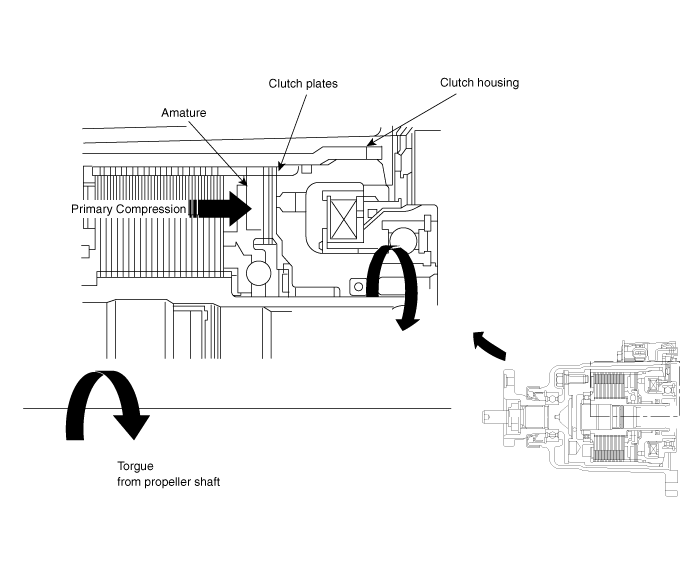
EMC (Electric Magnetic Clutch) operates the
primary clutch.
|
| 4. |
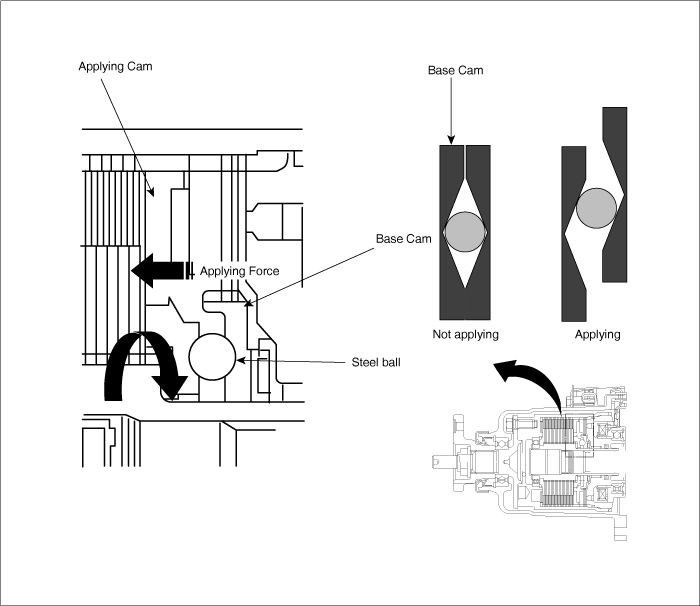
Control the cam's opening gap by operation of
primary clutch.
|
| 5. |
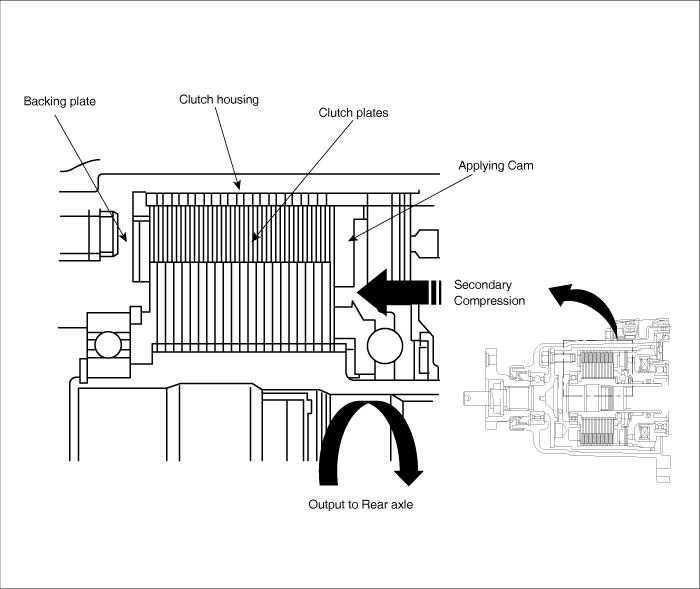
Control the slip of inner & outer
plate.
Control variably the driving force
distribution to optimize front & rear driving
force.
|


